NASCAR · Research guide
NASCAR GFS research: compare ranks over relevant races
Use green-flag speed ranks across selected races, then check grouping, sample size and whether the conclusion survives a different summary.
This guide and its screenshots are public. Tool access depends on your membership. Screenshots show interface examples; data and available slates change.
Select races before comparing the ranking
Choose the series, years and relevant tracks or track types. Exact race selection is available when you want to inspect a specific sample. Check the exhibition filter and the number of races included.
The GFS research view aggregates race-level GFS ranks rather than averaging raw miles per hour across tracks. A rank comparison is more useful than combining the MPH from a short oval with the MPH from a superspeedway, but the selected races still matter.
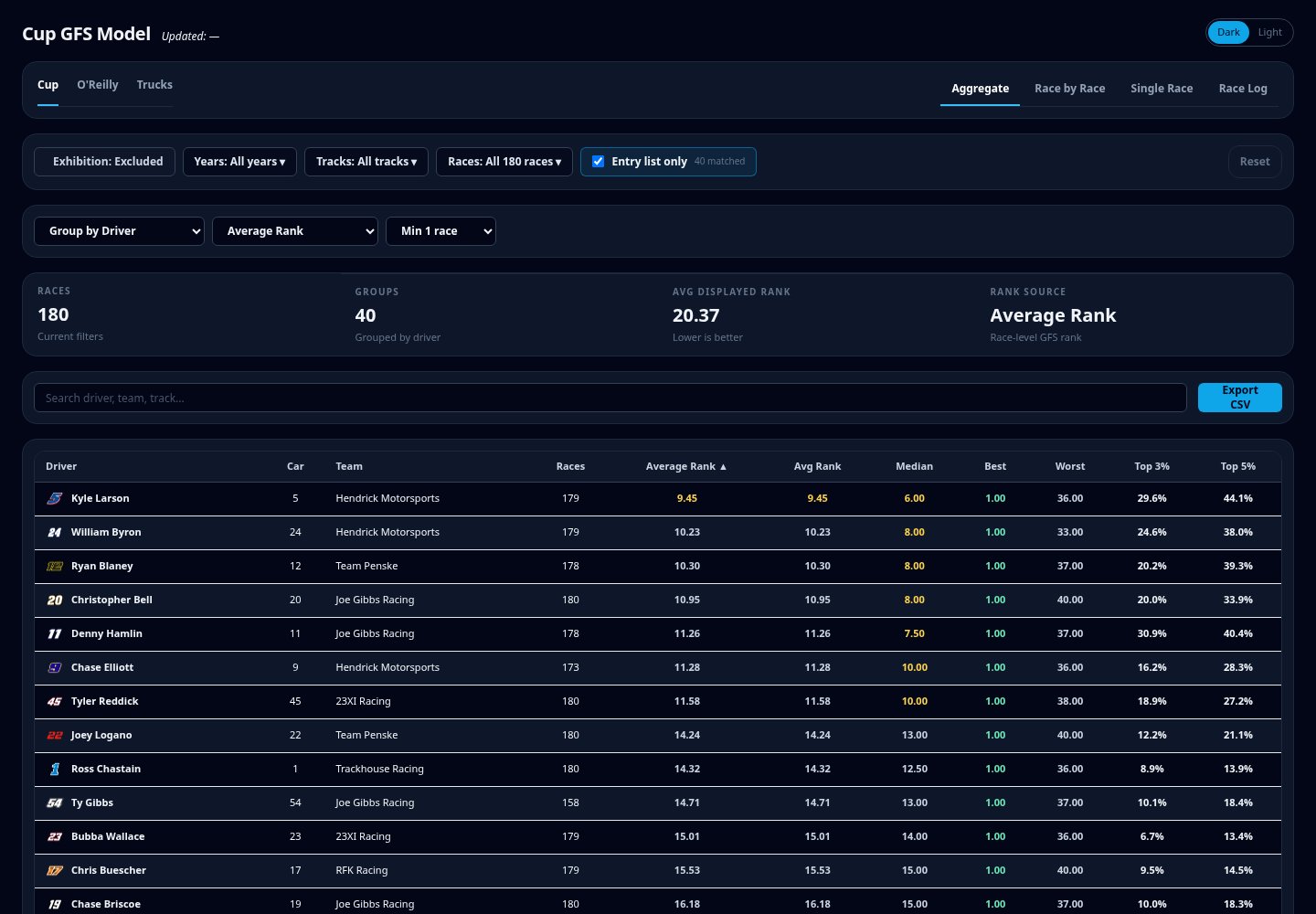
Choose the unit you mean to research
Group by Driver, Car Number, Team or Manufacturer. Driver grouping is appropriate for a personal form question. Car Number grouping follows that car’s history, which may include different drivers. Team and Manufacturer grouping broaden the comparison further.
Entry list only restricts the displayed driver view to the current entry-list matches when the source is available. It does not turn every historical observation into a current-week prediction. Check the match count before treating a missing driver as absent from the race.
Compare more than the best rank
Average Rank, Median Rank, Recent Weighted Rank and Best Rank summarize the selected observations differently. Lower rank is better. Best Rank highlights the strongest observation, not the typical one.
| Summary | Useful question | Follow-up |
|---|---|---|
| Average Rank | What is the mean performance over this sample? | Does one poor race move it sharply? |
| Median Rank | What does a middle observation look like? | Is the sample large enough to be useful? |
| Recent Weighted Rank | How does emphasizing recency change the view? | Did the schedule or equipment change too? |
| Best Rank | What was the strongest observation? | How often was that performance repeated? |
Use the minimum-race control
A driver with one excellent observation and a driver with six good observations have different support behind their averages. Use Min races to require a sample you can defend, then inspect the race-by-race columns for the drivers you are considering.
Do not automatically remove a bad rank because it weakens your preferred driver. Investigate the event in Race Hub. If the race was atypical for your question, explain why before changing the sample.
Take the rank back to the slate
Compare the historical speed evidence with current practice, qualifying, salary and projection. GFS rank does not include every part of DFS scoring or tell you how often a driver will be rostered.
A useful note is specific: the selected driver consistently ranked well over these relevant races, the current practice comparison supports it, and the salary makes the exposure worth testing. Build a small set and review whether the change creates an unintended driver core.
Continue with NASCAR
Use the NASCAR tools overview to find the related research and lineup tools, or check the update schedule before starting a new slate.
Related walkthroughs
NASCAR · Research
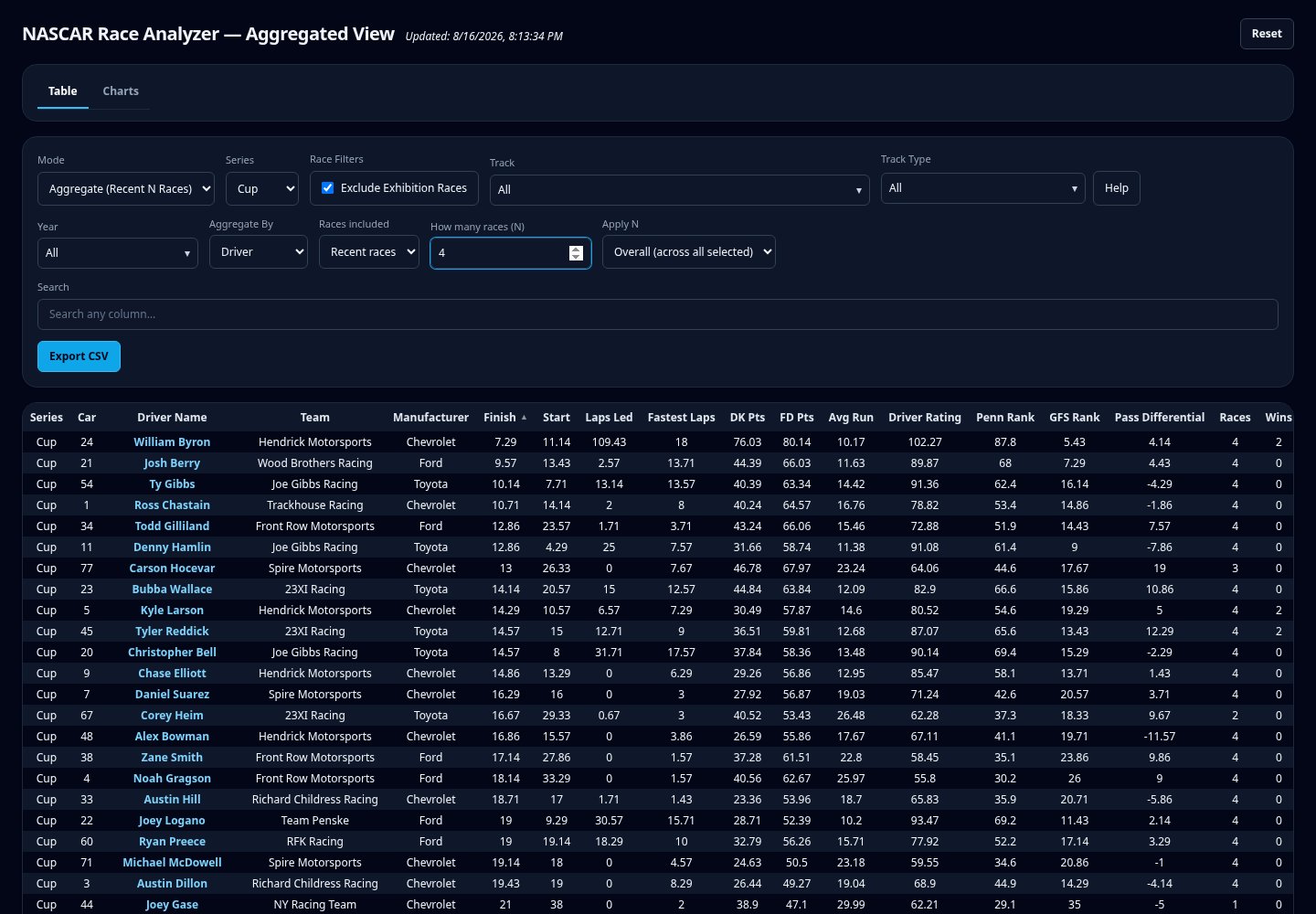
Loop Data Explorer: compare speed, results and recent form
Build a comparable race sample, aggregate by driver, car or team, and investigate the results that an average can hide.
NASCAR · Research
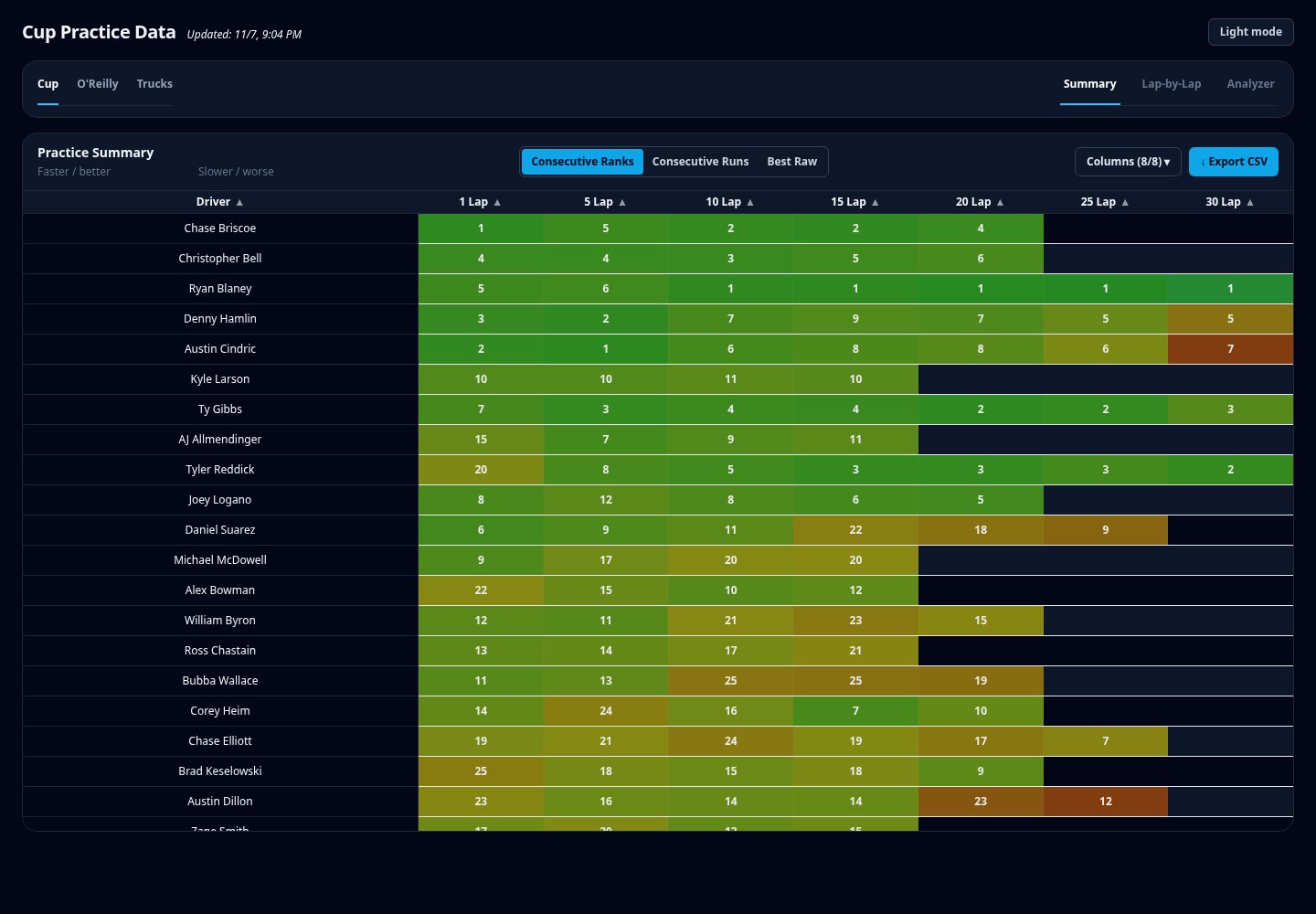
NASCAR practice: best laps, consecutive runs and stint evidence
Separate a quick lap from sustained speed, inspect the run sample, and compare drivers without mixing different definitions.
NASCAR · Research
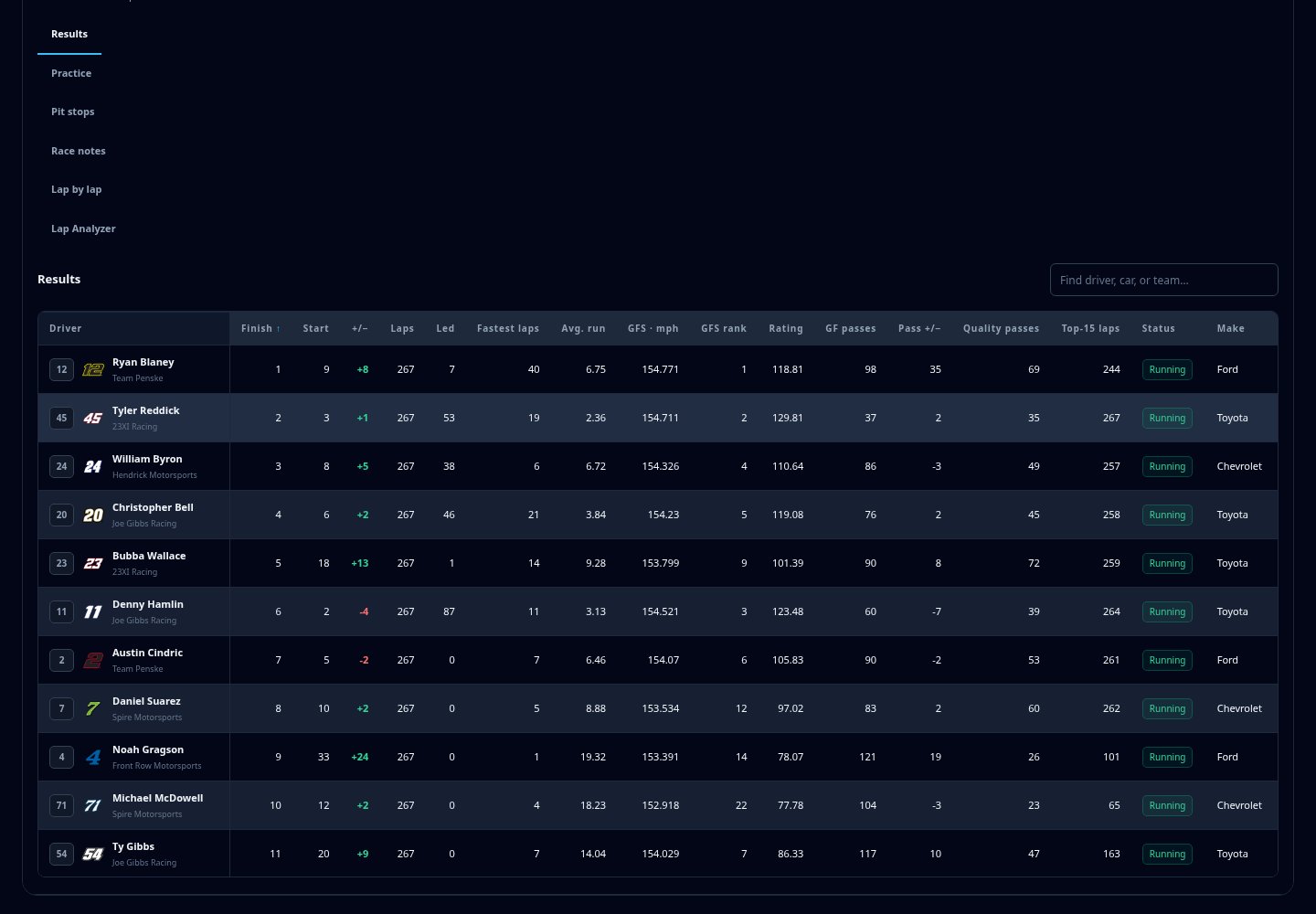
NASCAR Race Hub: investigate a race beyond the finish
Use results, practice, pit stops, race notes and lap analysis to explain what happened before changing a driver assumption.